From Commedia dell’Arte to Punch and Judy: Dark Seaside Puppet History
The Field Researcher’s Chronicle: From Italian Alleyways to the Violent Seaside—The Twisted Metamorphosis of Punch and Judy
There is a peculiar, slightly unsettling magic that happens when you trace the ancestry of popular culture. We tend to view history as a straight, tidy highway, but if you step off the main road and dig into the theatrical soil, you will find something far more bizarre. Today, we are opening the dusty cabinets of performance history to look at a mutation that shouldn't make sense: how a mask-wearing, slapstick Renaissance Italian theater troupe evolved into a deeply dark, delightfully "WTF" Victorian British seaside puppet tradition.
Pull up a velvet chair, ignore the faint squeaking of wood behind the curtains, and let us examine the strange evolution of Commedia dell’arte into the Whimsical fuckery that isPunch and Judy.
The Italian Genesis: Chaos, Codpieces, and Commedia
To understand the seaside madness of Victorian Britain, we must first transport ourselves to the sun-drenched, chaotic streets of 17th-century Italy. Here reigned Commedia dell’arte—a highly stylized, improvised form of theater performed by traveling troupes.
It was whimsical, yes, but it was also profoundly unhinged. Actors wore exaggerated leather masks and operated under strict "stock character" archetypes. There was Pantalone (the greedy, miserable old merchant), Il Dottore (the pompous academic who spoke absolute gibberish), and Arlecchino (Harlequin, the nimble, trickster servant).
But our focus today is on a secondary character named Pulcinella.
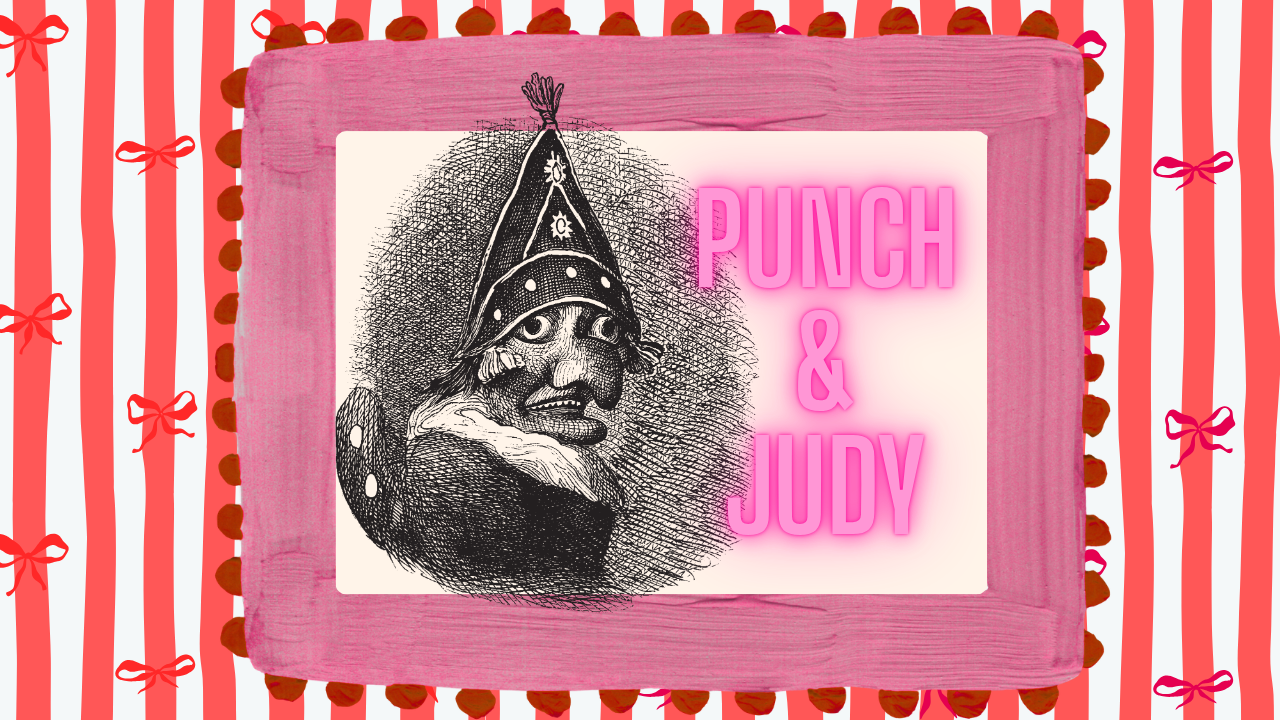
Pulcinella was a walking contradiction. He was traditionally depicted with a massive hooked nose, a prominent humpback, and a bizarre, squeaky voice produced by a theatrical device called a swazzle (a reed held in the actor’s mouth). Pulcinella was a servant, but he wasn’t noble. He was lazy, cruel, fiercely independent, and utterly chaotic. If he was hungry, he ate until he exploded. If someone annoyed him, he beat them with a wooden stick. He was the physical manifestation of raw human id, draped in baggy white cloth, dancing through the alleyways of Naples.
The Great Migration: Crossing the Channel
As the 17th century rolled into the 18th, Commedia troupes began touring Europe. When Pulcinella arrived in England, the British took one look at this hooked-nosed agent of chaos and said, "Yes, quite. We’ll take him, but make him smaller and much worse."
By the time the Victorian era arrived, the expensive, logistically complex human theater troupes of Commedia had largely vanished, but Pulcinella survived by shrinking. He migrated from the human actor to the wooden puppet. His name was anglicized to Punch, and his Italian wife, Joan, was rebranded as Judy.
Because a puppet booth requires only one or two performers (known as "Professors") and can be set up virtually anywhere, Punch found his ultimate home. And where did the Victorians love to gather? The seaside.
The Victorian Seaside: Sunshine, Sand, and Shocking Violence
Picture a Victorian beach resort. It is a place of forced civility—ladies in heavy wool bathing gowns, gentlemen under parasols, children building sandcastles. It was an environment of intense social suppression.
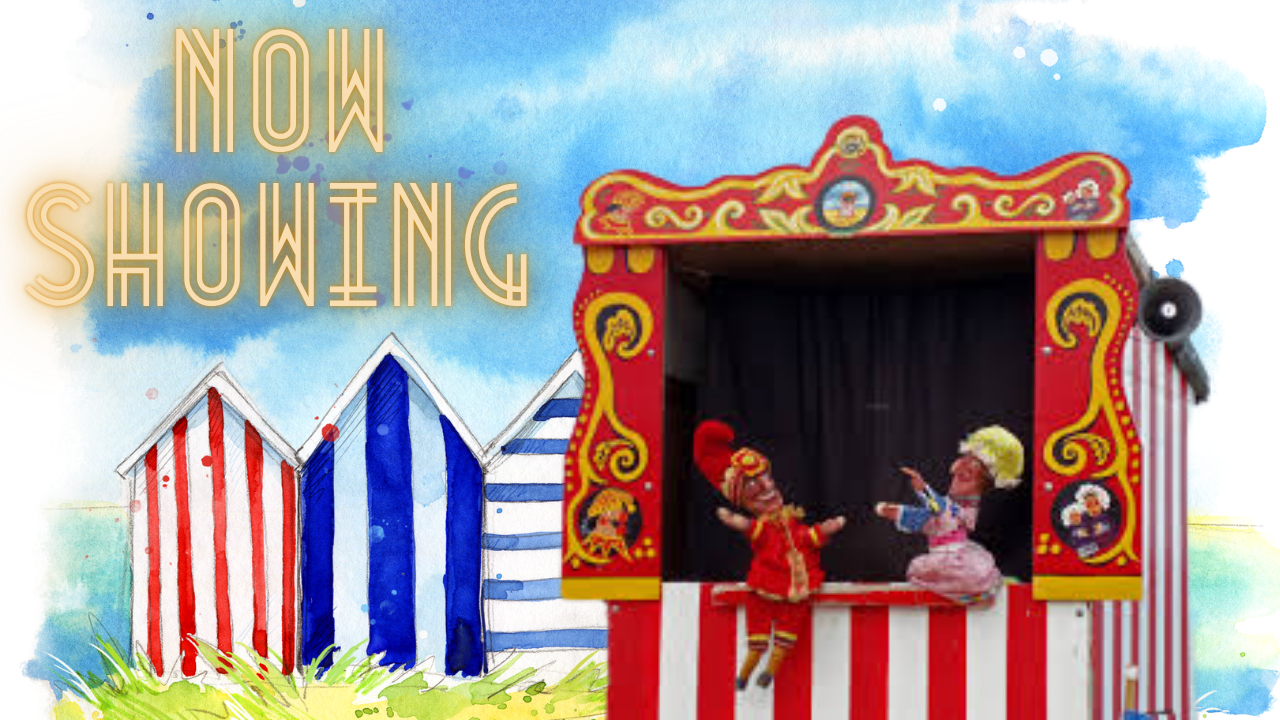
And right there on the sand, beneath a striped canvas booth, stood Mr. Punch.
The Victorian Punch and Judy shows were a radical distortion of their Italian roots. While Commedia used wit, acrobatics, and social satire, the seaside puppet shows leaned into pure, unadulterated, dark-whimsy surrealism. The plot of a standard Victorian Punch show reads like a fever dream:
Punch is left to mind the baby. The baby cries. Punch, lacking any paternal instincts, throws the baby out the window or passes it through a sausage machine.
Judy arrives, discovers the crime, and attacks Punch with a rolling pin.
Punch wrests the stick away and beats Judy to death.
The Police Officer arrives to arrest Punch. Punch beats the officer to death.
The Hangman arrives to execute Punch. Punch tricks the hangman into putting his own head in the noose and hangs him.
The Devil arrives to take Punch to hell. Punch defeats the Devil in a fistfight.
The crowd—composed largely of children and repressed adults—cheered wildly.
The "WTF" Factor: Why the Darkness Works
How did a culture so deeply obsessed with morality, etiquette, and mourning rituals embrace a hooked-nosed puppet committing domestic anarchy on a public beach?
The answer lies in the safety of the "Artifact." The seaside puppet booth served as a psychological pressure valve. In the 17th century, Pulcinella allowed Italian peasants to laugh at the greedy merchants and oppressive lords who ruled them. In the 19th century, Mr. Punch allowed the working-class British public to witness absolute sovereignty over the law, death, and social expectations—all wrapped in the whimsical, squeaking illusion of wood and cloth.
It was a dark fantasy masquerading as a children's amusement. Mr. Punch didn't just survive his crimes; he defeated the ultimate authority figures of the Victorian mind: the police, the executioner, and Satan himself.
The Field Verdict
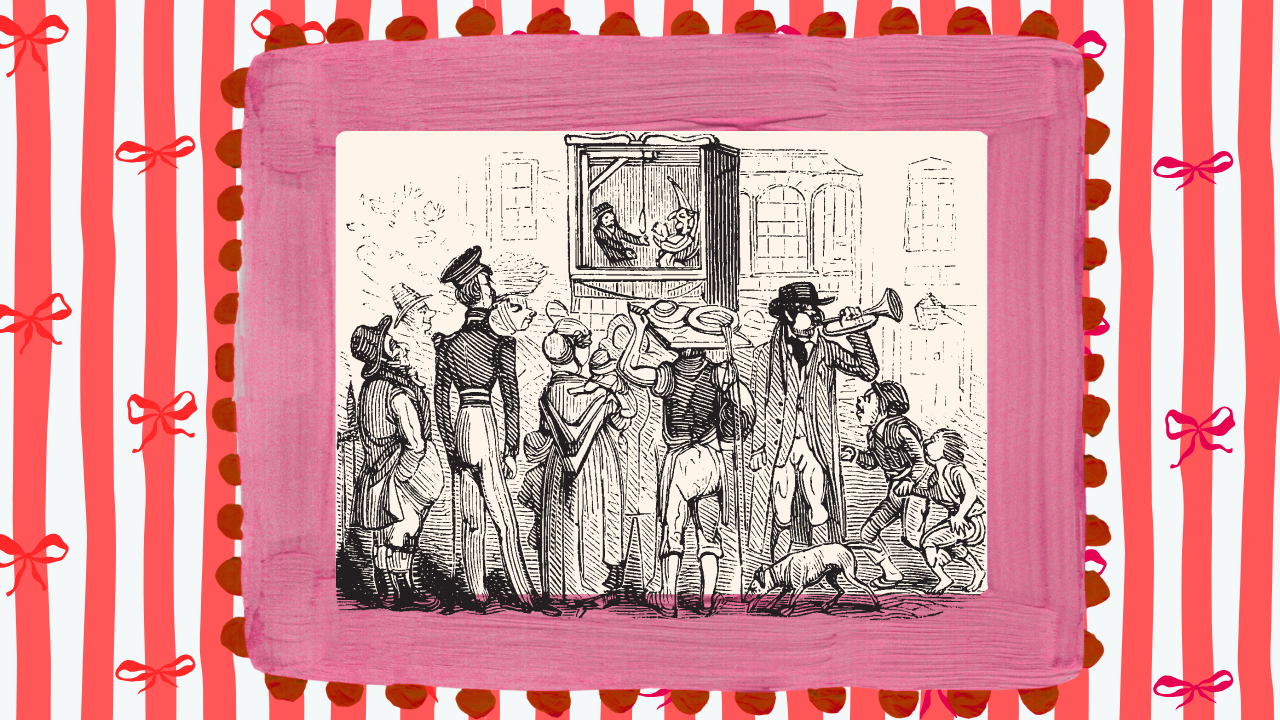
The next time you catch a glimpse of a traditional puppet show or notice a vintage Harlequin motif, do not look at it as a quaint relic of a simpler time. Remember the Italian alleyways, the leather masks, the swazzle-voiced servants, and the sweltering British beaches where morality went to die for an hour.
Humanity has always needed a space for the absurd, the violent, and the completely unexplained. Sometimes, the most whimsical things we create are just very clever masks designed to hide our darkest, oldest laughs.

Postscript: The Modern Retribution—Mirrah Foulkes’ Cinematic Reckoning in Judy & Punch (2019)
For three hundred years, the text of the seaside booth belonged entirely to Mr. Punch. Judy was merely a prop to be battered, a domestic obstacle to be disposed of along with the baby.
But in 2019, director Mirrah Foulkes stepped into the archive and spun a beautifully "WTF" live-action origin story that turns this asymmetry inside out. Set in the landlocked town of "Seaside"—a hypocritical hamlet obsessed with public stonings—the film stars Mia Wasikowska as Judy and Damon Herriman as Punch. Here, Punch is a narcissistic drunk, but Judy is the true artistic genius pulling the marionette strings.
When Punch’s real-world negligence leads to an unforgivable domestic tragedy, the slapstick breaks. He brutally beats Judy and leaves her for dead in the woods. Rescued by a camp of society's heretics and outcasts, Judy heals and transforms into a vessel of pure retribution.
Foulkes’ film works because it respects the Grand Guignol energy of the source material while executing a stylish, feminist reckoning. Ultimately, it delivers a sobering reminder: you can rewrite the play, but old, chaotic stories have a terrifying habit of outliving the people who survived them.