Fix The Brain Rot In Your Kid
Reclaiming Imagination: A Parent's Guide to the Great Digital Detox
I watched a child that is going into fourth grade, that reads at a mid-year first grade level bring an ipad to the park. It had a super nifty blue and greenish case, with a bright yellow handle so he could easily lug it with him everywhere. He sat down at a picnic table next to his mother, across from me. I looked over at the playground where my daughter and her friends were, there were lot’s of kids playing. And kid-wise there were quite a few that he knew- and knew well. He didn’t want to play. He wanted his tablet. I tried to reason with myself that would I have said something if he had shown up on a sunny day with a book instead and sat down to read? Honestly, yea probably. I believe in children moving- especially boys. But the cold-stark reality is that it wasn’t a book, because he was nine, and couldn’t read more than simple CVC words. And why should he? What was the motivation? What was so fun about books anyway? Especially in comparison to a tablet?
I told him “hey- race you to the slides?!” and he was off- challenge accepted. And that’s the saddest reality of all, the unnoticed but ever there glimmer of the need to still socialize.
When I look back on that playground vs. ipad experience, while I cook dinner, I think of all the stories I reenacted with my brothers. Narnia, Boxcar Children, The Hobbit, Spiderwick Chronicles… And I couldn’t help but wonder… How in the fuck do you play “youtube shorts”…?
When did reading become a chore? When the fuck did it move from privilege status? What the fuck are we actually doing as a society? Are we really that lazy?
But what if the "digital detox" didn't have to be a battle of wills? What if we could use the very science of the brain to turn "Do I have to?" into "Can we read just one more page?". What if you could get the same dopamine hit and rush from books and reading that you could from the tablet?
The Neuroscience of the "Screen Slump"
Let’s make reading epic, and fun again. But how? To understand how to detox, we have to look at the neurology of a developing child. Think of it as a dialogue between the screen and your child's mind.
The Dopamine Loop
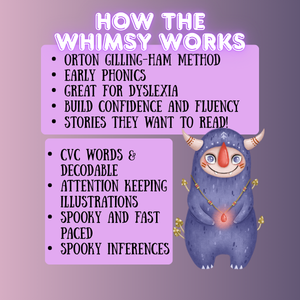
The Problem: Screens provide an instant, high-octane dopamine hit. Most traditional early readers ("The cat sat on the mat") provide zero cognitive reward because the story is dry. When the brain gets bored, dopamine drops and the child disengages.
The Whimsical Fix:You need a story that is genuinely gripping. When a tale is immersive and atmospheric—like the "dark whimsy" found in The Hag’s Pot—the anticipation of what happens next triggers a dopamine release that sharpens focus and cements memory.
The Battle of Cognitive Load
The Problem: Working memory is like a tiny bucket. When a child is overstimulated by screens or forced to decode complex, unpredictable text, that bucket overflows. They spend 100% of their energy on the "mechanics," leaving no room for enjoyment.
The Whimsical Fix: Narrow the "linguistic rules." By using books structured around simple phonics—like CVC words (pot, hag) and easy blends—we dramatically reduce the cognitive load. The "bucket" doesn't overflow, freeing up mental space for the magic of the story.
Real-Life Scenario: The Tuesday Night Meltdown
Setting:It’s 7:00 PM. The glow of the tablet is finally off, and the "real world" feels flat.
Child: (Throwing a book aside) "Reading is boring! I want my game back!"
Parent: (Sitting on the edge of the bed) "I get it. That game is like a fast-moving river, and this book feels like walking through mud right now."
Child: "It's just too hard. The words don't make sense."
Parent: "That's because your 'brain bucket' is full from all those flashing lights. What if we try a different kind of magic? One where you have the power?"
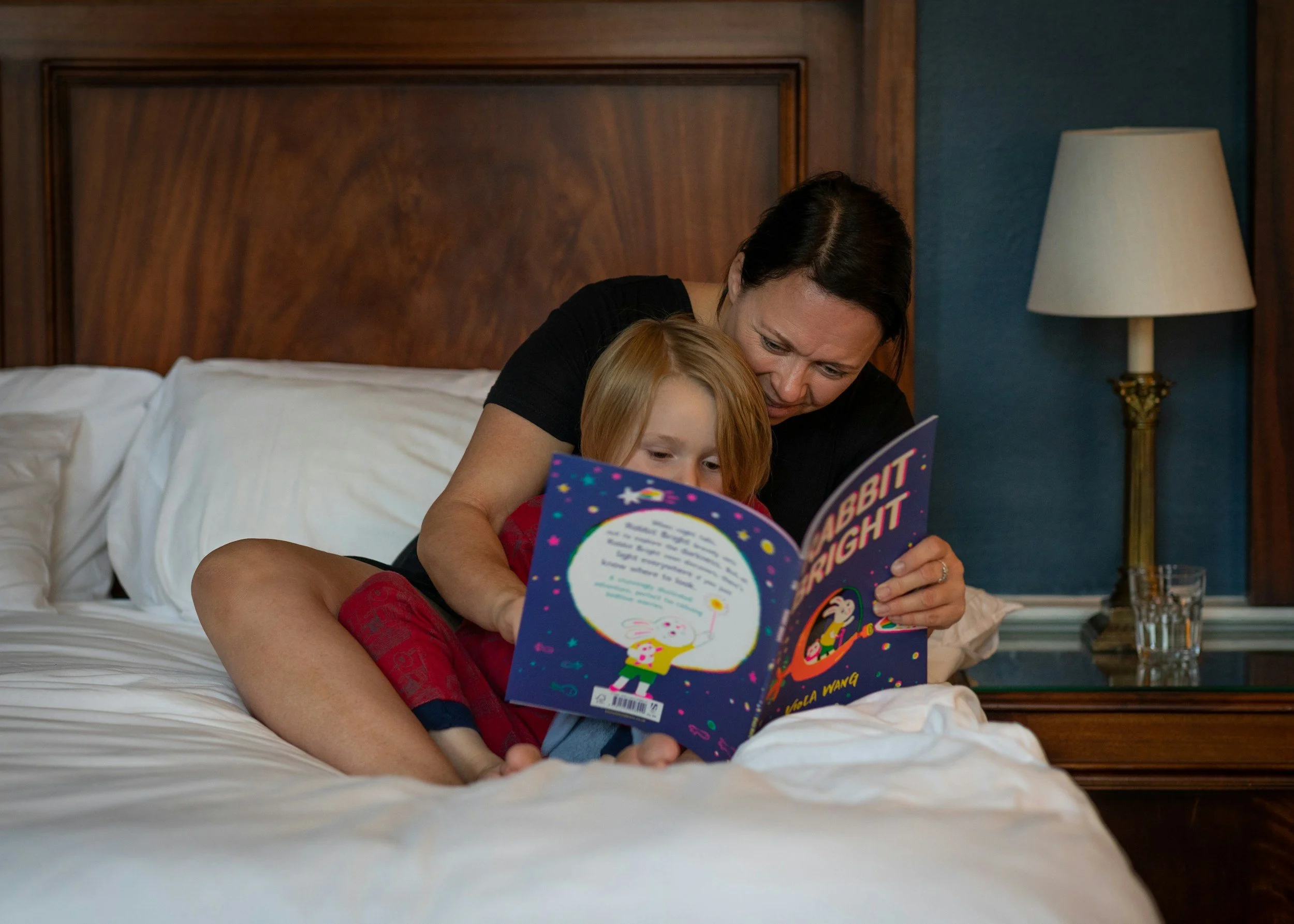
The Strategy: Instead of a "sterile phonics drill," introduce something with high-quality, immersive visuals that provide context clues. Use a story with a bit of "safe mischief"—like a mysterious, glowing green cauldron—to anchor their imagination. Scary AF goblins creeping around in shadows instead of the nightmare of “Poppy Playtime” (don’t even get me started).
Firing and Wiring: Paving the Highway
Every time your child successfully decodes a word, a synapse fires, releasing neurotransmitters that strengthen that neural bridge. Repeat after me, it’s ok if the word is familiar, “easy”, confidence is king. Let them be successful.
Old Way vs. New Way: The Battle for Neural Real Estate
The human brain isn’t naturally wired to read; it must literally rewire itself.
The Old Way (Systematic Foundations): This "bottom-up" approach builds brain automation. By mastering phonics and standard algorithms, basics move to long-term memory. This clears the "cognitive workspace," allowing the brain to focus on the magic of the story or the complexity of the math.
The New Way (Discovery/Guessing): Modern "balanced" methods force kids to guess using context clues. This overloads the prefrontal cortex—the brain’s slowest, most easily exhausted processor. Instead of building a "highway" of fluency, it creates a "traffic jam" of frustration.
The Fix: We must prioritize methods that respect the brain's limits. By teaching efficient, automated skills at home, we pave the way for true whimsy and lifelong mastery.
Success is Key: If a child repeatedly guesses incorrectly (as often happens with "Balanced Literacy" methods), those vital pathways don't form correctly. Easy is ok, because it will build confidence, they will be more open to take risks as a reader- and that looks like bigger, longer books, harder words.
The Result: By choosing books engineered for a high success rate, you trigger successful synaptic firings over and over. It’s the neurological equivalent of paving a dirt road into a smooth highway. Fluency.
The Verdict: Sovereignty of Time
The secret to a successful detox isn't just taking something away; it's giving them back the right things—books that respect their neurological limits while feeding their imagination. When you reclaim their education from the "fluff" of screens and convoluted school methods, you aren't just teaching them to read; you're helping them reclaim their own curiosity.
Reading can become the “new” “old” way to relax again. Screentime- it’s not a reward. It’s basically rewarding your kid with a decrepit brain. It was a tool, invented for adults to be more efficient. And now, companies are weaponizing it against your own children so that you can have two minutes of quiet. Just throw them a book instead.