Library Archive Item 002: Protocol for an Afternoon Ghost Tea Party
Log Entry: The Shifting Parlor
      THE COMPENDIUM PROJECT
               [ARCHIVE FILE: 002 // TEA]
The archives are unusually quiet today, save for the distinct, rhythmic clinking of porcelain coming from the locked cabinets in the Western most Wing. The unrelenting clinging finally pulled me from my work. Upon closer inspection, we uncovered a water-damaged, velvet-bound manuscript detailing the exact, delicate logistics of hosting a Ghost Tea Party.
In Whimsy Hollow, entertaining the spectral is not a matter of horror, but of hospitality. If you find your parlor room growing unusually cold, or notice the scent of forgotten lavender blooming out of season, you may have uninvited (but entirely polite) guests.
Should you wish to set a proper table for them, follow the recovered, and now archived protocols below. "The departed do not seek substance; they seek the memory of it."
A Conversation at Twilight
To understand the weight of these protocols, one must look to the diary entry of Arthur Vance, a former clerk of the Whimsy Hollow Library, dated October 14th, 1884. He wrote of an unexpected encounter in the reading room:
The fire had died down to low, blue embers when the air turned sharply to frost. I felt her before I saw her—a silhouette draped in tattered lace, standing perfectly still by the window sill.
"The tea is quite cold, Mr. Vance," a voice murmured. It didn't come from her throat, but seemed to echo from the floorboards themselves.
"My apologies, Madame," I replied, carefully keeping my eyes on my ledger. "I can brew a fresh pot of Earl Grey, if you intend to stay until the moon clears the ridge."
The specter drifted closer, her fingers hovering an inch above an empty porcelain cup. "Earl Grey is loud. It screams of the living world. Do you have nothing softer? Something that tastes of a rainy Tuesday in April?"
"I have dried chamomile and crushed clove," I offered.
She paused, a faint, translucent smile touching her lips. "That will suffice. And Mr. Vance? Do not look so hard at my hands. It makes it difficult to keep them in this century."
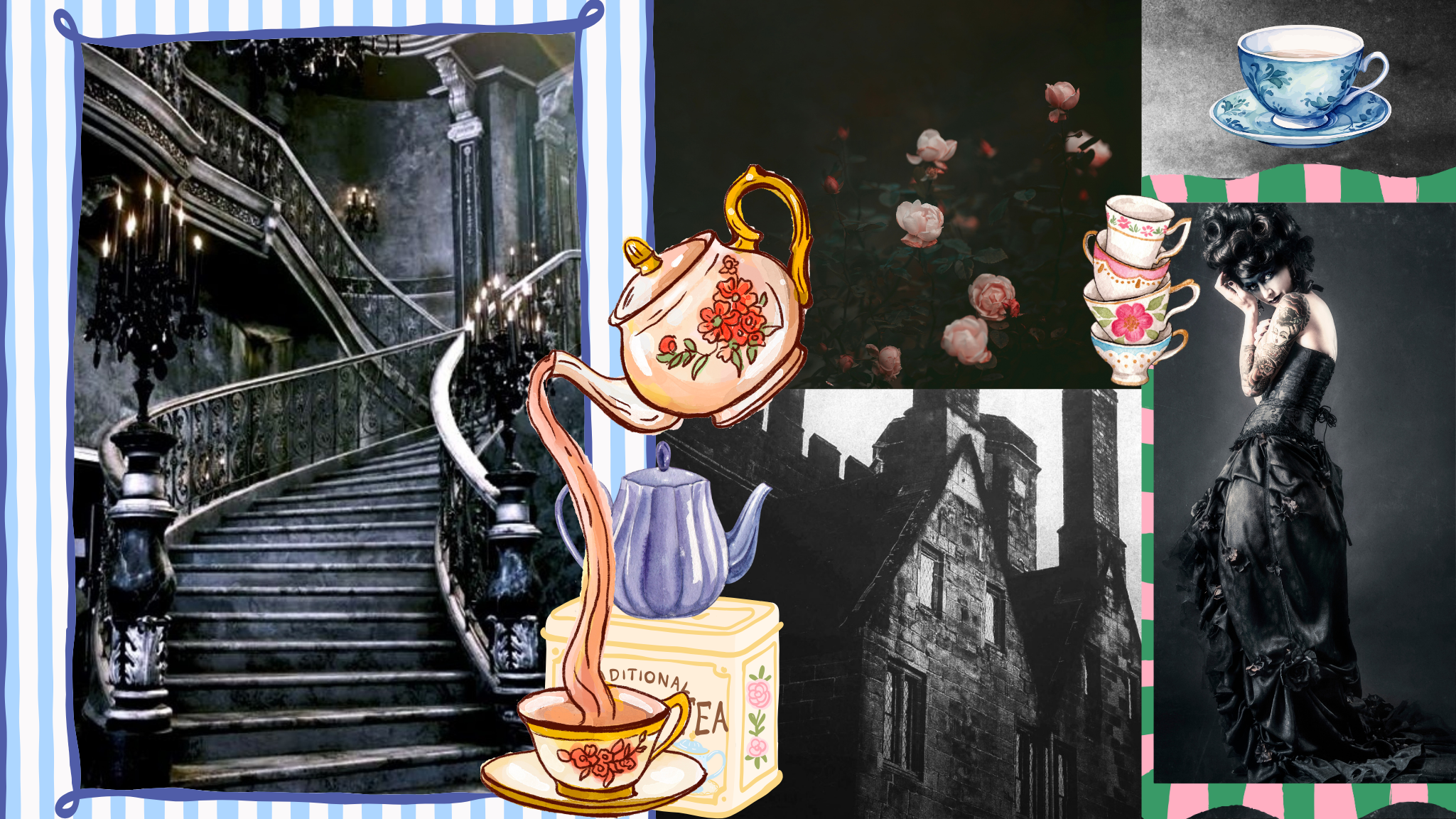
The Origin: The Blackwood Incident of 1642
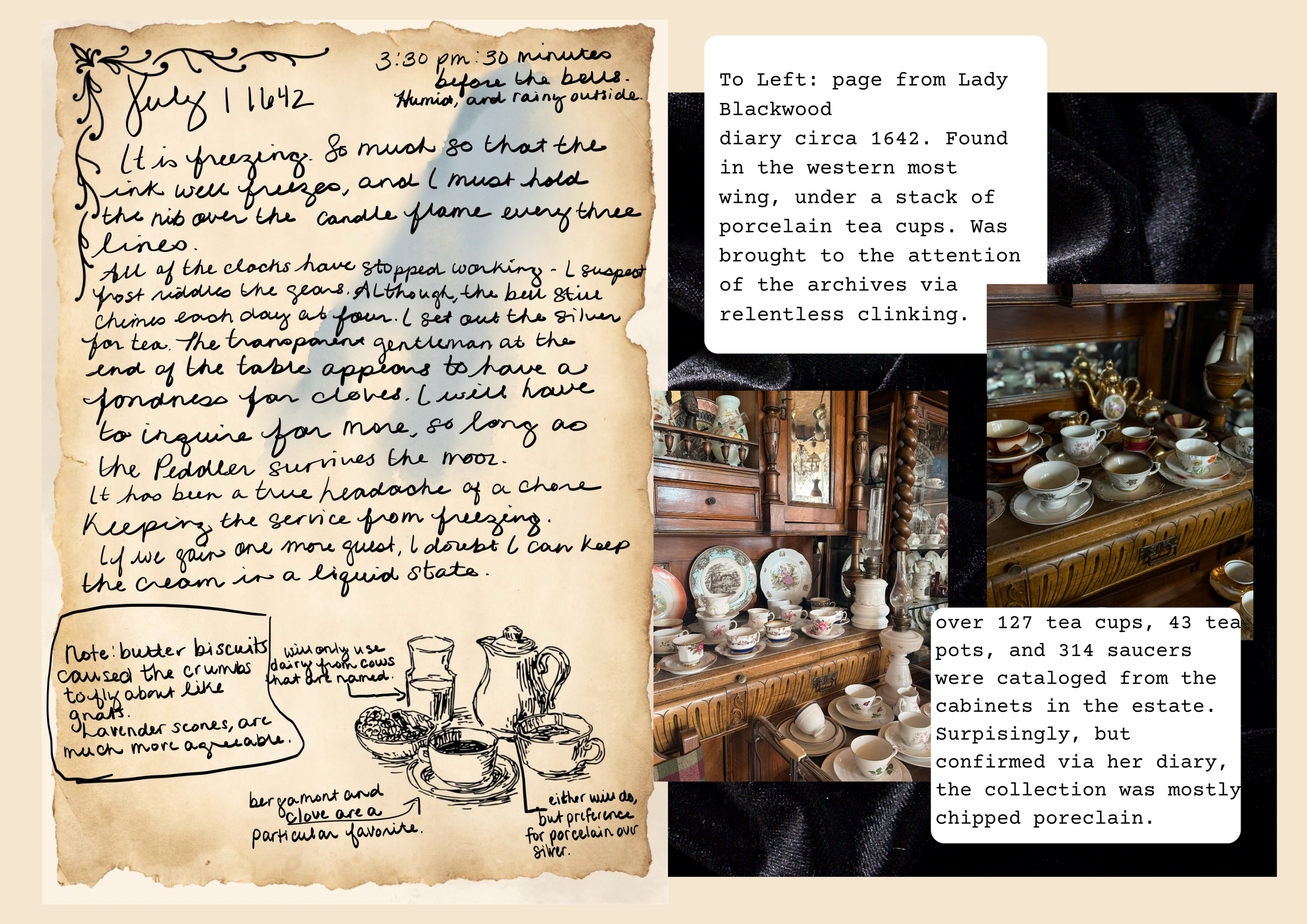
While casual hauntings are common throughout the lower valleys, the formalization of the "Ghost Tea" as a structured administrative protocol dates back to the early winter of 1642, during what the archives call The Blackwood Incident.
According to recovery logs, Lady Cordelia Blackwood locked herself inside the manor library following the sudden disappearance of her estate's inner circle. For forty days, townspeople reported smoke rising from the chimneys, accompanied by the distinct, frantic ringing of a silver dinner bell at exactly four o'clock each afternoon.
When the conservatory doors were finally breached by the town constabulary, Lady Blackwood was found perfectly alone at a table set for twelve. The air inside the room was recorded as so bitter that frost had crystallized over the velvet curtains, yet the hearth was roaring.
The first official manuscript entry reads:
"We found her pouring boiling water into empty, cracked porcelain. When questioned as to why she had depleted the estate's entire winter supply of loose-leaf tea, she noted that her guests were 'dreadfully thirsty from the walk across the moor, and grew terribly loud when the saucers were left empty.' On the table lay the first rough draft of these very guidelines—written in an erratic, shivering hand—proving that a spirit provided with a warm cup and an undisturbed hour will choose conversation over chaos every single time."
Protocol I: The Material Provisions
Spirits cannot digest physical matter, yet they are deeply drawn to the sensory anchors of the living world. To host an authentic spectral tea, your physical setup must match their energetic resonance. Spirits cannot digest physical matter, yet as previously noted, they are deeply drawn to the sensory anchors of the living world. To host an authentic spectral tea, your physical setup must match their energetic resonance. If the table is dressed too modernly or carelessly, the veil remains thick, and your guests will linger only as an ambient chill rather than a true manifestation.
1. The Broken Vessel
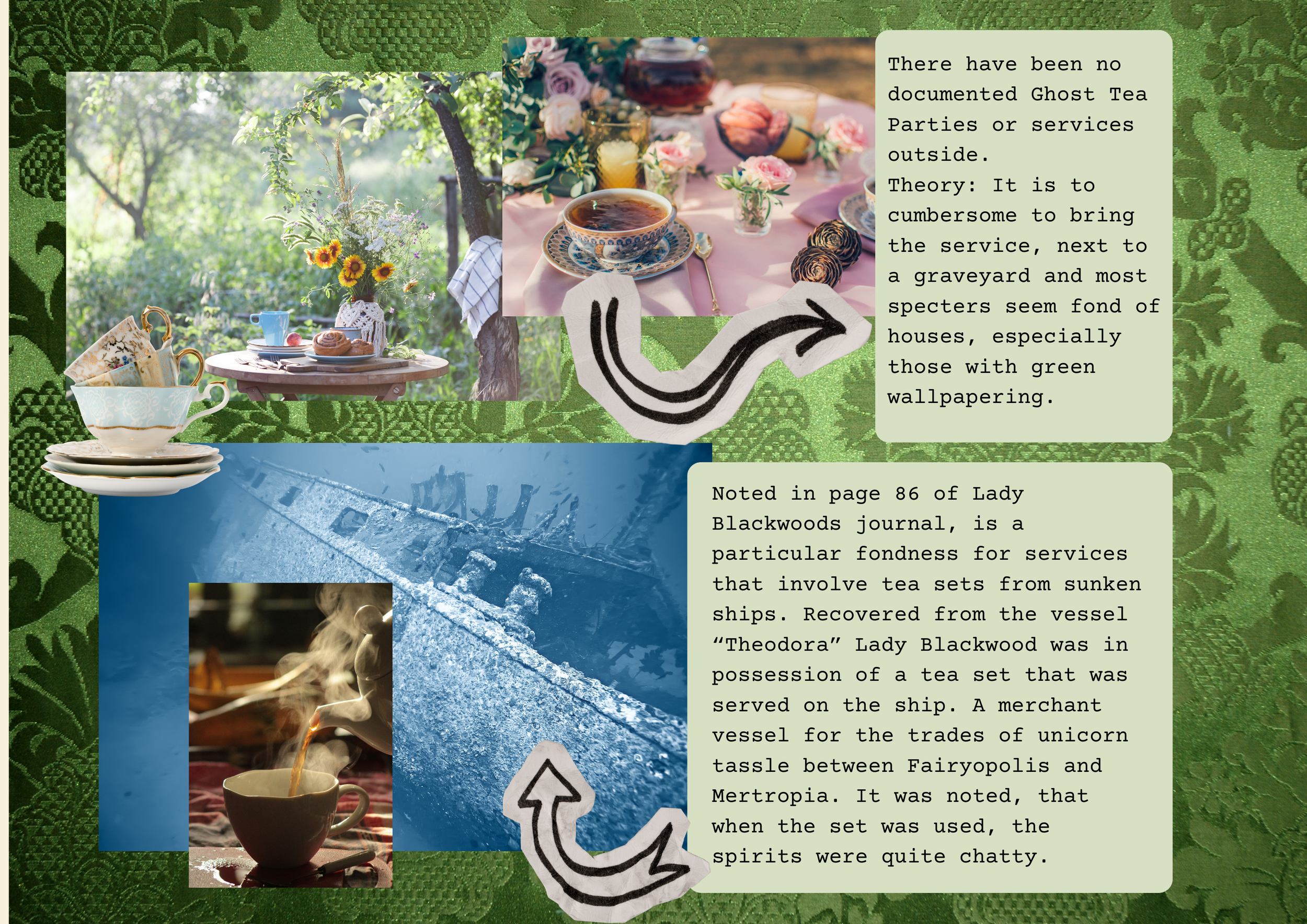
Do not bring your pristine, modern sets to this table. Ghosts are drawn to objects with history. A hairline fracture in a teacup, a chipped saucer, or faded gold gilding serves as an aesthetic crack in the veil. The spirit utilizes the "brokenness" of the object to anchor their fading energy to the space. According to library records from the late 1800s, spirits utilize the "brokenness" of an object to anchor their fading energy to the space. The imperfection acts as a doorway. When pouring, always fill the chipped cup first; the spirit will naturally drift toward the vessel that matches their own fragmented state.
2. The Aggressive Brew
Because the boundary between realms is thick, a subtle tea will go entirely unnoticed. You require an aromatic profile heavy enough to cut through the fog of centuries.
The Recommended Blend: A blend of smoked rosemary, dried blackberry, and over-steeped black tea. The smoke mimics the hearths they once sat by, while the blackberry provides a sharp, tart reminder of wild summers.
The Steeping Rule: Leave the leaves in the pot. Bitter tea holds a stronger worldly presence than perfectly timed infusions.
3. The Pastry Illusion
Serve paper-thin cucumber sandwiches and white sugar cubes left to crystallize in the open air. Place them on a silver tray. If you notice a sugar cube look slightly less defined after an hour, do not comment on it. They are drawing the sweetness from the air. When organizing the menu, remember that spirits consume through sight and scent alone. Serve paper-thin cucumber sandwiches cut into precise triangles, and white sugar cubes left to crystallize in the open air for a few days prior to the event. These items must be displayed on a tarnished silver tray—never wood or ceramic—as silver is a notorious conductor of residual memory.
Set a single plate at the center of the table for the collective dead. If, after an hour of quiet conversation, you notice a sugar cube looks slightly less defined around the edges, or a pastry appears minutely lighter than it was a moment ago, do not comment on it or look directly at the plate. They are drawing the literal sweetness from the air, exhausting the physical sugars to sustain their brief visibility.
Protocol II: Spectral Etiquette & Best Practices
The greatest danger in hosting a ghost tea party is not physical malice, but emotional entrapment. Spirits are fragile, volatile constructs of memory; handling them requires strict psychological boundaries. When a soul crosses the threshold into a warm, lit room, they are disoriented—suspended between the anchor of your teacup and the pull of the vacuum behind them.
As the host, your demeanor dictates the stability of the room. If you falter, the atmosphere will degrade rapidly.
1. The Rule of the Present Tense
Never ask a ghost how they passed, nor what lies beyond the veil. These questions are catastrophic to a spectral consciousness. Forcing a spirit to remember their departure or conceptualize the void causes their form to immediately destabilize. Within seconds, your guest will begin to fray at the edges, manifesting as a violent, aggressive drop in room temperature or a localized draft capable of shattering glass.
Instead, speak exclusively of the afternoon at hand. Discuss the temperature of the parlor, the texture of the lace tablecloth, the quality of the sugar, or the book you are currently reading. Keep them tethered to the year 2026.
“To keep a spirit at peace, treat them not as an anomaly to be solved or a historical ledger to be interrogated, but simply as a guest who has arrived slightly early for the evening.”
2. Guarding Your Gaze
As noted extensively in Arthur Vance's library logs, looking directly at a ghost’s structural imperfections—their blurred, shimmering edges, their lack of a physical shadow, or the way the wallpaper shows through their translucent hands—causes them intense existential distress. It forces an abrupt, unwanted realization that they are no longer physical beings, breaking the illusion of the tea party entirely.
Practice a disciplined, lowered gaze. Keep your eyes trained on your own saucer, the steam rising from the pot, or your notebook. If you must look toward them, aim for the space just below their chin or focus on the reflection of their silhouette in the polished silver of the tea tray.
3. The Turning of the Page
If a guest becomes restless—indicated by a sudden, rhythmic rattling of the silver spoons, a rhythmic flickering of the candles, or a low hum in the floorboards—do not panic, and under no circumstances should you abruptly stand up or leave the table. Sudden movements will scatter their energy and warp the room.
Instead, employ the oldest preservation tactic in the archive: the sound of paper turning. Slowly pick up a heavy, leather-bound hardcover book or your personal journal and begin flipping the pages at a deliberate, measured pace. The crisp, mechanical shuck-shuck of heavy paper acts as an incredibly grounding metronome for the displaced dead. The sound mimics the passage of structured time, lulling their chaotic energy back into a calm, static state before the candles burn down to the wick.
Protocol III: Cataloging the Encounter
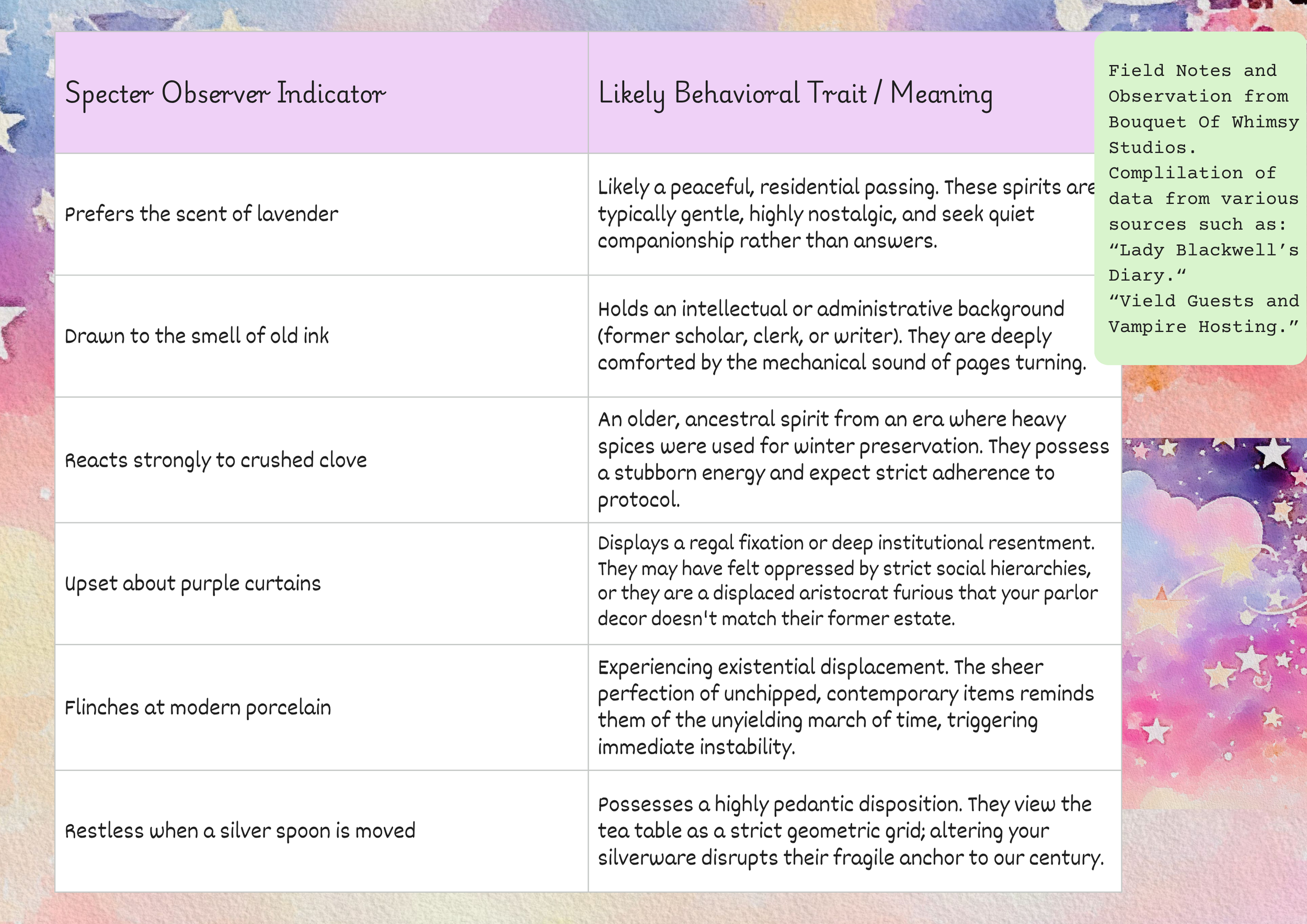
A true archivist never lets a quiet afternoon pass without taking notes. The impressions left by a spectral guest are fleeting—like waking from a vivid dream, the details of their clothing, the cadence of their whispers, and the specific chill they left behind will fade from your mind within an hour of their departure.
To properly log these shifting anomalies, you must maintain a dedicated paper or digital ledger.
[FIELD NOTES LOG SHEET]
Date of Manifestation: _______________________
Atmospheric Temp Drop: _______ Degrees
Scent Noted (Circle One): Lavender / Wet Earth / Old Ink / Smoke
For the sentimental souls who wish to turn their daily digital workspace into a cozy, historical archive, the Studio has preserved the perfect canvas. Our Whimsical Reading Journal features hand-illustrated whimsigoth vibes, dark coquette styling, and a generous area for journaling, field notes, and other whimsical writing ideas you may have. Enjoy- and stay whimsical my friends.