Inside the Studio: A Deep Dive into High-Stim Literacy™
The Archive Files: A Conversation on High-Stim Literacy™
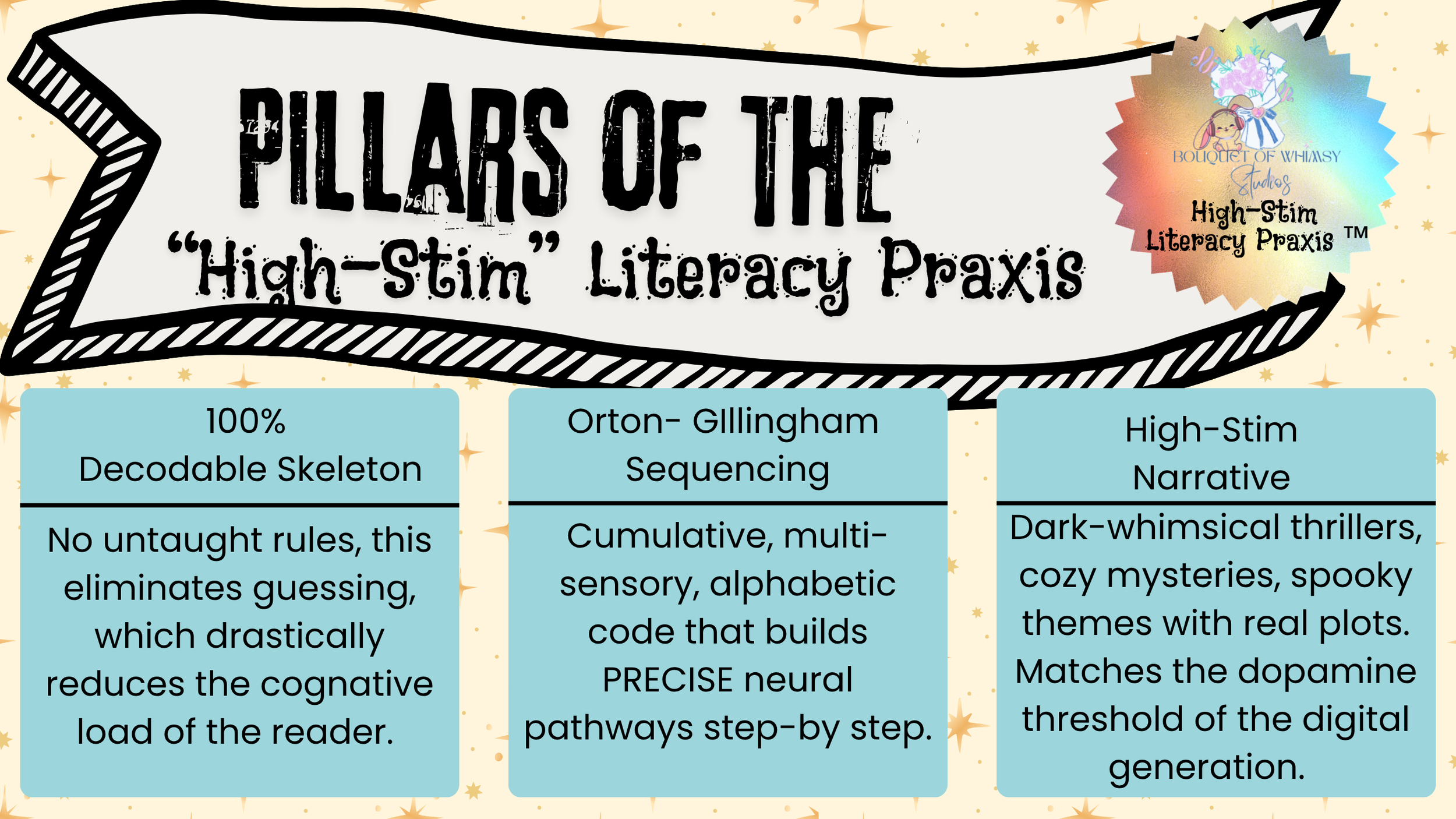
Welcome back to the studio archives. Today, I’m stepping away from the drafting table to sit down with Elara, one of our observers, to pull back the curtain on the "why" behind our books. We’re diving deep into the methodology we call High-Stim Literacy Praxis.
Elara: Let’s start with the name, because it’s bold. "High-Stim Literacy" sounds like the opposite of everything we’re told about quiet reading time. Aren’t we supposed to be calming kids down to get them to focus?
BoW: That’s the traditional school of thought, Elara, and frankly, I think it’s why so many modern kids are falling through the cracks. We are living in a digital attention crisis. Modern children are "calibrated" to high-intensity stimuli—fast cuts, instant feedback, and constant dopamine hits from screens. When you take a child who is used to that pace and hand them a book about a cat sitting on a mat, their brain registers "zero cognitive reward." Their dopamine levels drop, they get bored, and they disengage. We don't try to fight that stimulation; we harness it.
Elara: So you’re saying you "fight fire with fire"? How does that actually manifest on the page for a five or six-year-old?
BoW: It’s a formula we’ve refined over years of research. First, there’s Jagged Pacing. If you look at the text in The Hag's Pot, the sentences are short and punchy. They mimic the "fast cuts" of digital media to keep the brain engaged.
Then, we use Visceral Phonics. Instead of dry, clinical words, we prioritize sounds that trigger a physical sensory response—skritch, hiss, thud, damp. We want the child to feel the word as they decode it. It turns reading into a physical experience rather than just an intellectual one.
Elara: You’re known for the "Dark Whimsy" aesthetic—goblins, hags, and skeletal kings. Some might say that’s too "intense" for early readers. Why lean into those themes?
BoW: Because adrenaline is a powerful focus tool. Most early readers are intentionally "safe" and sun-drenched, but for a child used to the high stakes of a video game, "safe" is synonymous with "boring." High-stim themes provide the necessary tension to keep a reluctant reader invested. When a child is reading to find out if a character escapes a cursed pot, they have a neurological reason to push through the hard work of sounding out a word. The tension provides the reward.
Elara: I’ve heard you mention that these books are for the kids who are struggling most. Is there a worry that "High-Stim" might actually be "Too Hard"?
BoW: Not at all. In fact, the mechanics are simpler than most school books. We use a Zero-Guessing Architecture. Our books are 100% decodable, focusing strictly on fundamental building blocks like CVC (Consonant-Vowel-Consonant) words, CVCC words, and easy blends.
We keep the mechanics simple so the story can stay intense. By removing the need to guess based on pictures—which actually overloads the brain's slowest processors—we clear out the "cognitive traffic jam." The child builds immediate confidence because they can actually read every single word.
Elara: Looking at the "Nation’s Report Card," literacy scores have been stagnant for a long time. How does this praxis offer a way out of that plateau?
BoW: The system is stuck in "Balanced Literacy," which often asks kids to guess words from context clues. That’s exhausting for a developing brain. High-Stim Literacy Praxis returns to the "Old Way" of systematic phonetic foundations but wraps it in a "New Way" of high-intensity storytelling. We are moving from mere compliance—making a child sit still—to genuine curiosity.
Elara: What is the ultimate hope for a child who picks up a Bouquet of Whimsy book?
BoW: That they realize the "Screen Slump" isn't a permanent state. We want to turn that slump into a "Story Hunt." We aren't just teaching kids to decode symbols; we are showing them that books can be just as visceral and exciting as any digital world. We’re building a highway to fluency, one "skritch" and "thud" at a time.