But we have AI- I don’t need to Read…
The Last Sovereign Act: Why the Age of AI Demands More Than "Prompt Literacy"
We have arrived at a strange inflection point in human history. We are told that the age of deep reading and laborious writing is over. The narrative is alluring: Why spend years mastering the mechanics of syntax, phonics, and composition when a machine can synthesize a 1,000-word essay in three seconds?
To the casual observer, reading and writing have been reduced to mere administrative tasks—clerical outputs that can be outsourced to an algorithm.
But as field researchers of the human condition, we must look deeper. Literacy was never about producing text. Literacy is about neural architecture, cognitive sovereignty, and human evolution. When we outsource the written word, we aren't just saving time; we are dismantling the very machinery of human thought. BECAUSE READING IS NOT A NATURAL PROCESS… It is NOT the same as language/ speaking.
Here is the unvarnished, science-backed truth of why deep literacy is more critical now than ever before.
1. The Neurobiology of the Reading Brain: Paving the Neural Highway
Cognitive science has proven a fundamental truth: Human beings were never born to read. Read that again. Never. Born. To. Read.
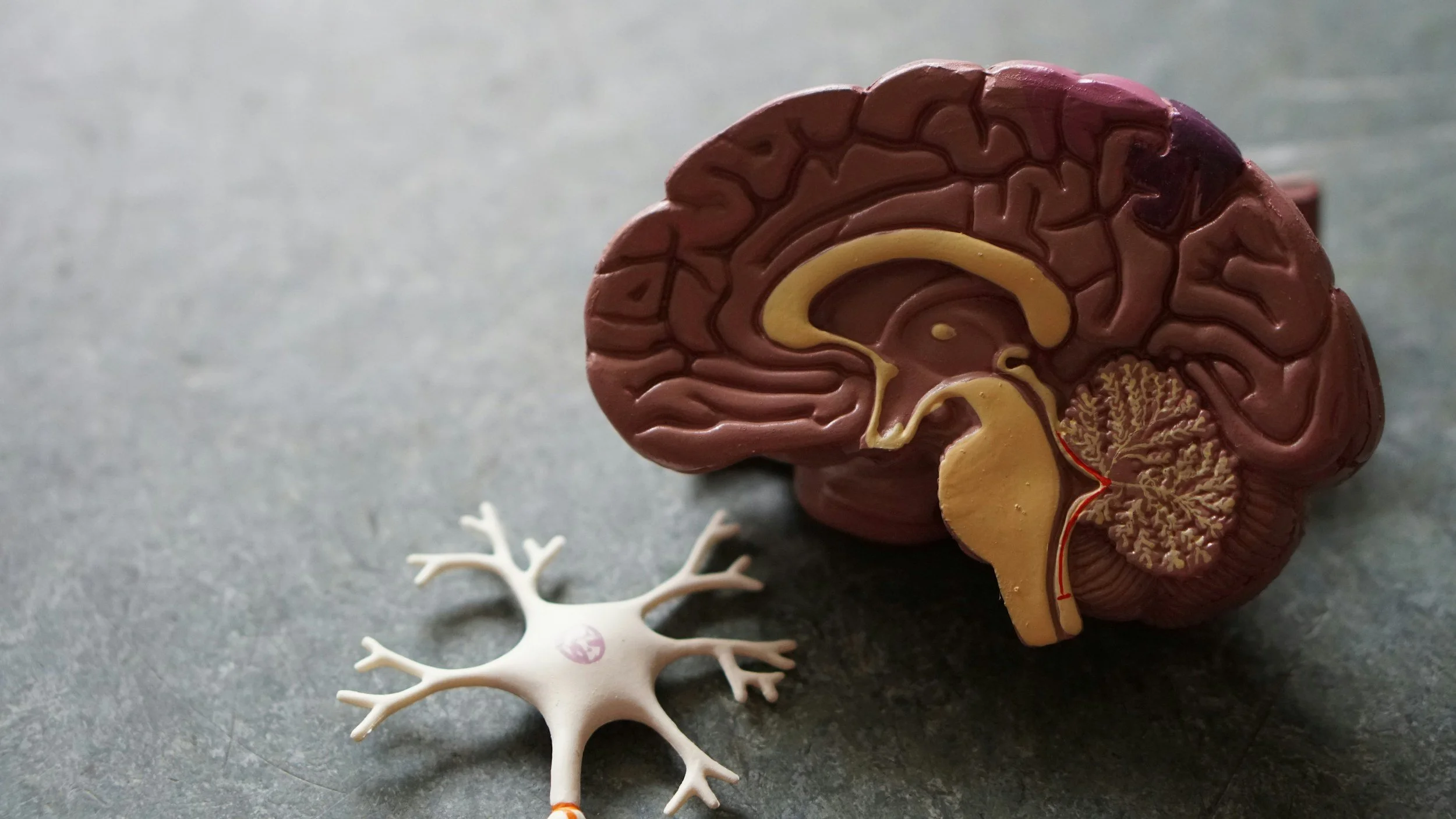
Unlike speech, which is an evolutionary instinct hardwired into our DNA over hundreds of thousands of years, reading is a biological "hack." The human brain has no dedicated "reading center." Instead, it relies on neuroplasticity to literally break and rewire existing visual and auditory circuits—a process known as neuronal recycling.
When a child or an adult engages in deep reading, they are firing synapses that build the Visual Word Form Area (VWFA), often called the "brain's letterbox." Every time a reader handles complex syntax, navigates subtext, or decodes structured phonics, they are thickening the corpus callosum and strengthening the myelination of neural pathways.
The Cognitive Load Dilemma
When we write, we aren't just dumping thoughts onto paper; we are utilizing our Working Memory to organize chaos into logic. The act of handwriting or organizing a deep essay forces the prefrontal cortex to sequence ideas, analyze contradictions, and commit structures to long-term memory. You may have heard from many different people “once I write it down, I remember it.” You can leave a grocery list YOU wrote at home, but still have fairly good accuracy recalling the items you need. This is why.
If we transition to an environment where we only prompt AI and consume algorithmic summaries, synaptic pruning takes over. The brain operates on a strict "use it or lose it" biological budget. Without the cognitive load of deep reading and writing, the neural highways we spent centuries building degrade back into dirt roads. We become cognitively dependent on the very machines we claim to command. You may think- “yea but that will just clear up more space for the important stuff.” You guys- it won’t because those synapses will fade. There will be no where in your brain to put “the important stuff”.
2. Anthropological Factors: The Technology of Human Consciousness
From an anthropological perspective, writing is not merely a tool; it is the ultimate cognitive technology that altered human consciousness forever.
In his seminal work Orality and Literacy, anthropologist Walter J. Ong demonstrated that writing actually shifts how human beings think. In purely oral cultures, thought must be structured in short, rhythmic, memorable patterns because if you forget it, it ceases to exist.
Writing allowed humanity to think abstractly, linearly, and skeptically. It gave us the ability to separate the thinker from the thought, look at an idea critically on a page, and dissect it. This anthropological shift is what gave birth to science, philosophy, and individual law.
If society stops writing deeply and begins relying on AI to generate its arguments, we regress into a new form of "secondary orality." We stop engaging in the linear, rigorous construction of arguments. Instead of thinking through a problem, we accept the generalized, flattened consensus generated by a predictive model. We lose the evolutionary edge of autonomous, critical dissent.
3. Sociological Realities: The New Class Divide
Society is rapidly organizing itself into a dangerous, silent hierarchy based on literacy praxis:
There are going to be two classes, those who control the AI, those who consumer the AI. The Sovereign Class vs. The Consumer Class. The consumer class will do just that- consume, they will require AI to summarize, have AI write and respond for them, and be controlled by the Algorithm. Why is this bad? Well, because it’s well along the lines of brain washing.
The Sovereign Class however; those with high- stim literacy skills, will possess the ability to fact check, research, write the literal narrative, the literal code, and thus control the parameters of the machine.
Sociologically, widespread low-level literacy creates an immense vulnerability to gaslighting at scale. When a population can no longer read a complex historical document or a dense legal contract for themselves—relying instead on an AI summary—they hand over the keys to their perception. And perception is reality.
Unbiased historical data shows that whenever a society centralizes the ability to interpret the written word (whether it was the medieval priesthood or modern tech monopolies), the average citizen loses their sovereignty. Deep literacy is the only equalizer.
The Verdict: Reclaiming the Human Hunt
The system wants us compliant, scrolling, and outsourcing our mental heavy lifting to digital processors. They want our "brain buckets" full of low-stimulation, instant-gratification digital static.
But at Bouquet of Whimsy, we know that true magic—and true human authority—lies in the struggle of the hunt. That the dopamine hit isn’t the check out itself, it’s the thrill of the chase, and the eureka of discovery.
Teaching a child to master CVC and CVCC words, forcing ourselves to read books that challenge our attention spans, and sitting down to sweat over an original sentence are not obsolete pastimes. They are acts of resistance. We are not just training our brains to decode symbols; we are defending our right to think for ourselves.