Beyond the Scroll: 4 Cozy, Whimsical Rituals to Romanticize Your Free Time
The Chronology of Quiet: A Compendium of Whimsical Activities to Reset Your Free Time.
We have all felt the quiet weight of the modern evening. You sit beneath the sharp, cool glow of a rectangle of glass, your thumb performing a rhythmic, almost mechanical flick upward. You pass by stylized snippets of other lives, rapid-fire flashes of news, fleeting trends, and brief bursts of noise. Minutes dissolve into hours. By the time you finally set the screen down, your eyes feel heavy, your neck aches, and yet your mind is completely, buzzing-ly restless.
This is a very specific, modern kind of fatigue. It isn’t the exhaustion of hard, physical labor, nor is it the clean tiredness that follows a day of deep focus. It is information gluttony paired with imaginative starvation. We are consuming everything and creating nothing.
The antidote to this state of existence isn’t merely doing less. It is choosing to care more about the textures, the spaces, and the micro-narratives we inhabit during our offline hours. It requires trading passive consumption for active immersion.
Enter the concept of the whimsical hobby. A whimsical hobby is not a side hustle. It does not demand that you optimize your output, track your metrics, or monetize your passion. Instead, it is a deliberate step into a pocket-sized universe—a sanctuary for your curiosity, where the only goal is to cultivate a sense of wonder.
If you are ready to reclaim your attention span, quiet the digital noise, and infuse your life with a touch of cozy fantasy, open this compendium. Here are four deeply immersive, textured, and delightfully unusual paths back to yourself.
1. Digital Scrapbooking & Collage-Style Journaling
The Philosophy of the Screen as a Sanctuary
For years, the wellness space has preached an absolute gospel: if you want to find peace, you must abandon your screens entirely. We are told to lock our tablets in drawers, buy analog alarm clocks, and retreat to a pre-internet state of simplicity. But for many of us, this creates an adversarial relationship with our devices. The screen becomes the villain, a source of constant temptation and subsequent guilt.
What if we changed the narrative? What if, instead of abandoning the digital realm, we redeemed it?
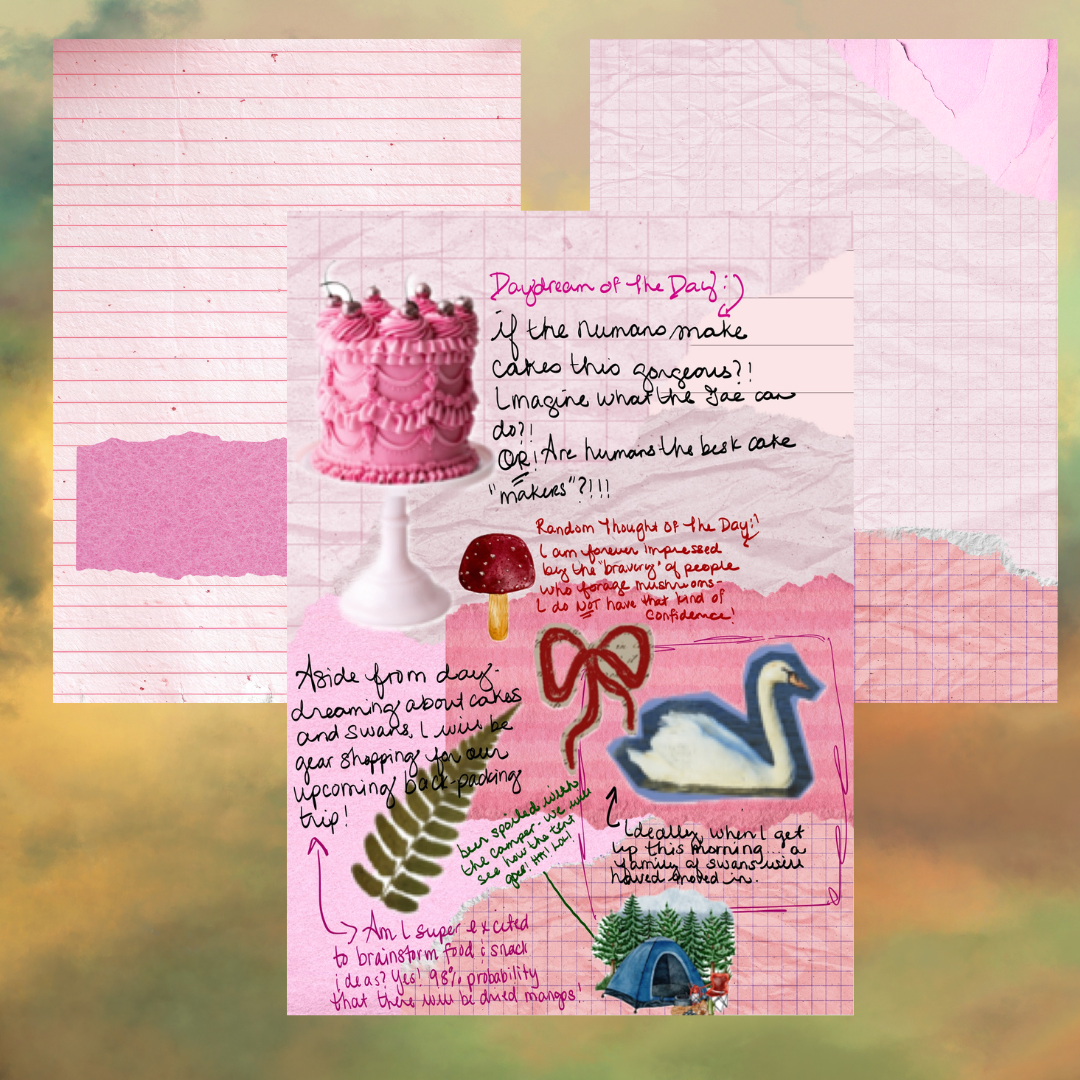
Digital scrapbooking and mixed-media journaling represent a profound shift in how we interact with technology. It is the process of transforming a device that is traditionally used for passive intake (social media, emails, notifications) into an active canvas for artistic curation. You are no longer letting the algorithm feed you images; you are hand-selecting textures, arranging layouts, and dictating the visual landscape of your mind.
The Tactile Allure Without the Clutter
Many people love the idea of traditional scrapbooking. They watch videos of creators layering antique papers, stamping ink, and taping down pressed flowers. But the physical reality of scrapbooking can be daunting. It requires an explosion of supplies: specialized cutting mats, expensive glue runners that inevitably jam, drawers stuffed with paper scraps you can’t bring yourself to throw away, and a completely dedicated desk space that ends up covered in dust and adhesive residue.
Digital crafting strips away the friction while preserving the soul of the art form. It allows you to build a hyper-textured, deeply nostalgic world within the clean, portable confines of a tablet or laptop. It scratches the exact same creative itch as physical crafting—allowing you to play with composition, color harmony, and historical aesthetics—without leaving a single scrap of paper on your floor. It is a portable sanctuary you can take to a dimly lit coffee shop, an airplane seat, or beneath the covers of your bed at midnight.
The Anatomy of a Coquette & Vintage Canvas
To build a digital scrapbook page that feels truly immersive, you must step away from clean, sterile digital lines and embrace the beauty of imperfection. The goal is to make the digital page look as though it has a physical soul.
The Textural Base: Every great layout begins with the background paper. Instead of a solid white digital sheet, layer high-resolution scans of aged materials. Think of a slightly yellowed ledger sheet from the 1890s, a piece of torn music notation paper, a faint pink gingham textile texture, or a delicate sheet of vellum.
The Layering Protocol: The secret to mixed-media art is depth. Drop in your elements as independent digital layers. Place a piece of "torn newspaper" down first, tilt it slightly, and then overlay a "pressed botanical stamp" or a piece of faux-washi tape over the corner to anchor it visually.
The Whimsical Elements: Embrace the romanticized motifs of the coquette and cottagecore aesthetics. Incorporate high-resolution images or illustrations of soft silk bows, vintage frosted cakes, graceful swans, fresh strawberries, and delicate lace borders.
Typography As Art: Do not rely on standard, clean system fonts. Mix handwritten script fonts with bold, mismatched "ransom note" lettering cutouts to give your titles a rebellious, handmade character.
Step Into the Coquette Dream Studio
If you are ready to transform your digital planning space into a romantic, vintage sanctuary but don't want to spend hours hunting down textures, discover our newly unveiledCoquette Dream A5 Digital Journal Template in The Studio Shop. Curated with hand-scanned mixed-media layers, delicate pink gingham accents, and nostalgic ephemera, it provides the perfect atmospheric starter kit for your new evening ritual.
2. Fantasy Quest Backpacking & The Adventure Field Kit
Deconstructing the Modern Outdoor Narrative
If you look up backpacking or hiking online today, you will be met with an incredibly intense, hyper-masculine, and utilitarian narrative. The algorithms will show you ultralight neon nylon gear, carbon-fiber trekking poles, military-grade water filters, and smartwatches designed to track your heart rate, elevation gain, and exact mile times. The outdoors has been thoroughly gamified and commodified into a sport of endurance and efficiency. You are encouraged to conquer the mountain as quickly as possible.
But what if you don't want to conquer the mountain? What if you simply want to meet it? Have some cocoa with it? Share stories? Observe it.
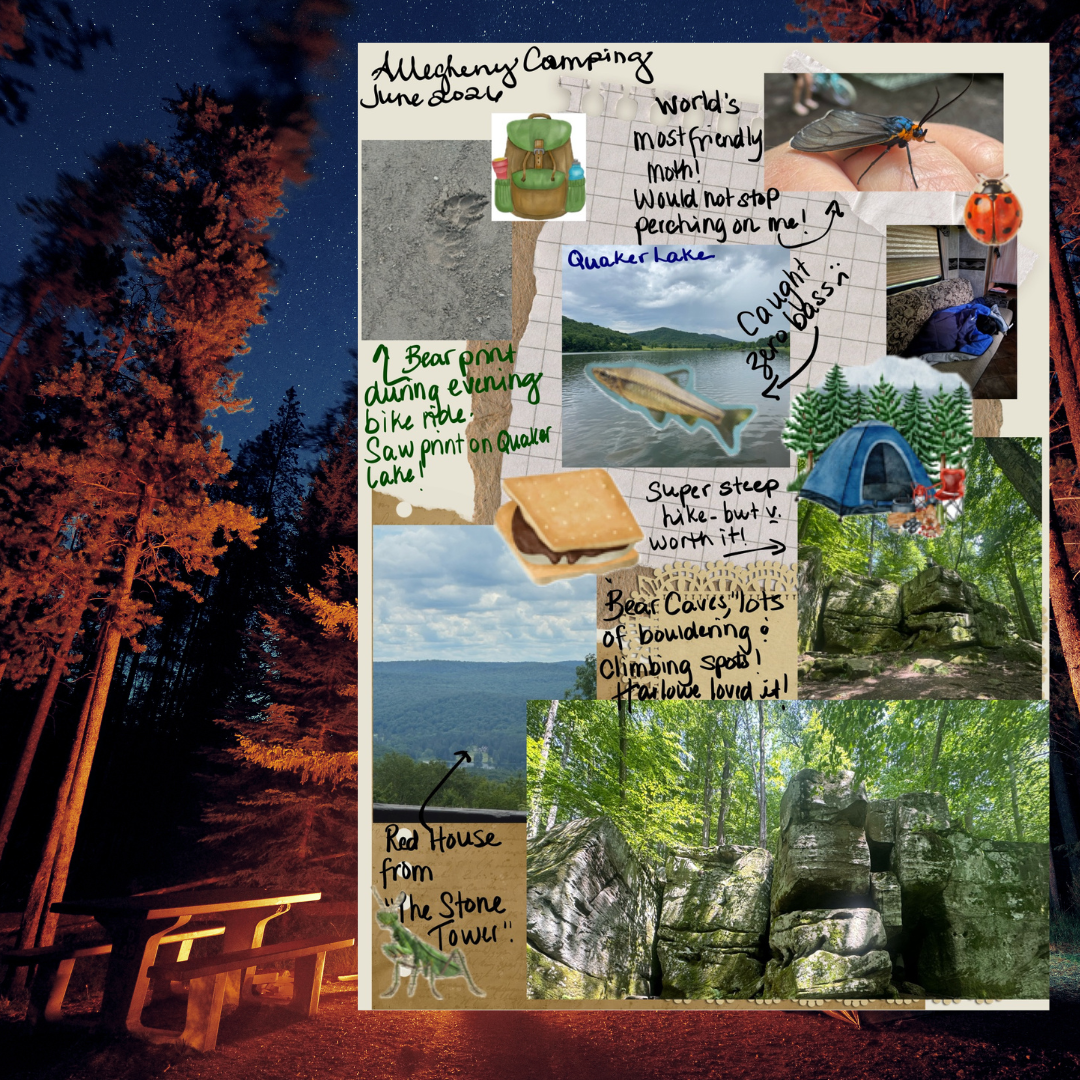
Fantasy quest backpacking is a complete subversion of the modern hiking culture. It approaches the wilderness not as a gym, but as a living storyboard. It draws inspiration from classic high-fantasy literature, historical naturalism, and folklore. When you step onto a trail with this mindset, you are not an athlete tracking calories; you are a cartographer, a wandering scholar, or a hedge-witch gathering data on the mosses of the realm.
Crafting Your Aesthetic Field Kit
The transformation from an ordinary hike to an immersive quest relies heavily on the physical objects you choose to carry. Swap out the synthetic, loud textures of modern sportswear for materials that feel timeless, durable, and grounded. Your Field Kit should be a small, self-contained universe of creativity housed inside your pack. It should include a heavy, unruled journal with thick cotton rag paper that can take a wash of water without buckling completely, a pocket watercolor palette, a solid brass compass, and a small magnifying glass to examine the microscopic architecture of lichen, bark, and insect wings. It should also contain whimsical, and hobbit like snacks. Such as those that can be found in this culinary gem of an archive.
The Ritual of the Trailside Stop
The core practice of this hobby is the deliberate, unhurried pause. You walk until you find a location that possesses an undeniable atmosphere—a clearing where the morning sun pierces through old pines, a smooth stone slab beside a rushing creek, or the ruins of an old stone wall swallowed by ivy.
You do not check your phone. You do not worry about your pace. You sit down, open your canvas pack, and spread out your field kit.
Spend the next hour documenting the space around you. You don’t need to be a master artist; the goal is observation. Sketch the silhouette of a jagged cliffside. Dip your water brush directly into the stream beside you and lay down a wash of color to capture the specific, murky green of the river moss. Write down a description of the weather using 19th-century maritime terms.
When you look back at a journal page created in this manner, it holds an entirely different energy than a collection of digital photos stored in a cloud folder. It contains the literal texture of the day—perhaps a smudge of real dirt on the corner of the page, a dried leaf pressed between the sheets, and the uneven, beautiful lines drawn by a hand resting on a rock.
Document Your Expedition
Every wandering scholar needs a place to record their discoveries. If you are ready to venture out into the wildwood and map your own journey, don't leave without our signature Adventure Field Journal. Built for the modern naturalist, it is the ultimate companion to house your landscape sketches, pressed flora, and trailside musings.
3. Aesthetic Car Camping & The Moving Parlor
Redefining Wilderness Comfort
Traditional camping often comes with a laundry list of minor miseries: sleeping on a thin, deflating foam pad over a hidden tree root, shivering in a synthetic sleeping bag while condensation drips from the ceiling of a cramped nylon tent, and eating freeze-dried meals out of a silver pouch with a plastic spork. While there is a time and place for rugged survivalism, it rarely leaves room for deep creative reflection.
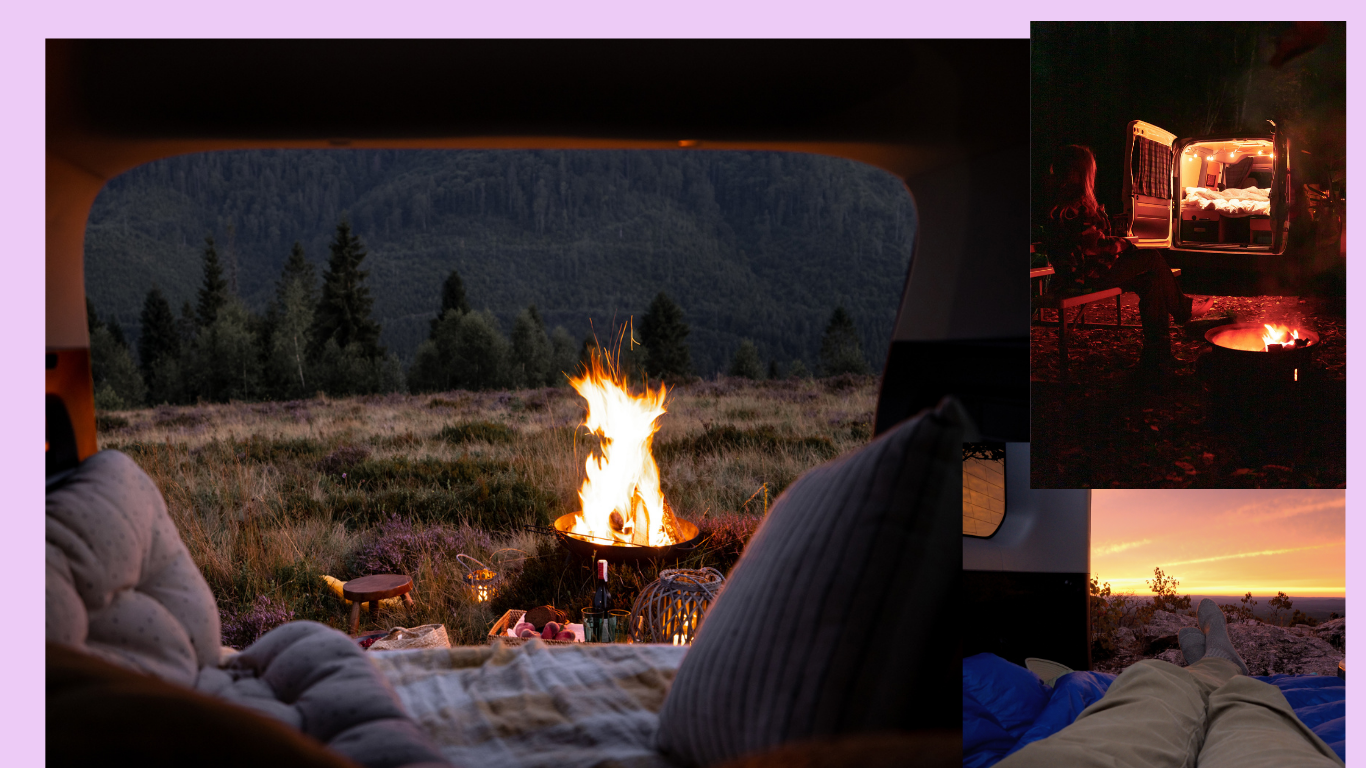
Aesthetic car camping turns this entirely on its head. It strips away the utilitarian discomfort of the wilderness and replaces it with the concept of the Moving Parlor. The objective here is to take the absolute coziest, most indulgent elements of an old-world library or a historic sitting room and transport them directly into the deep woods. Your vehicle is no longer just transportation; it is a mobile, weatherproof cabin with a view of the stars.
Architecture of the Ultimate Mobile Nook
To transform a standard hatchback, SUV, or station wagon into a whimsical sanctuary, you must focus entirely on textile curation and lighting design.
The Foundation: Fold your rear seats completely flat. Lay down a thick, high-quality memory foam mattress topper or a sturdy double airbed. Cover it completely with a soft, fitted cotton sheet so no part of the plastic or car interior is exposed.
The Layering of Quilts: Ditch the sleeping bags. Instead, bring real blankets from home. Layer a heavy wool blanket for warmth, a vintage patchwork quilt for visual charm, and a down comforter wrapped in a crisp linen duvet.
The Lighting Grid: Turn off the harsh, white overhead interior car lights. Instead, string warm, battery-operated LED fairy lights or Edison bulbs along the grab handles and clothing hooks of the ceiling. Place a small, vintage-style battery lantern on the wheel well to cast a soft, low glow across your pillows.
The Tailgate Station: The back lip of your trunk becomes your kitchen counter. Arrange a wooden crate to hold a classic glass French press, a pair of heavy ceramic mugs, a jar of local honey, and a tin of loose-leaf herbal tea.
The Twilight Reading Ritual
The magic of the Moving Parlor peaks during the golden hour and the long twilight that follows. Drive to a legal, safe campsite perched at the edge of a scenic overlook, deep within a national forest, or right along a misty coastline. Back your vehicle in so that when the trunk is fully opened, it frames the landscape like a massive, living painting.
As the sun sets, light a safe, wood-wick candle on the open tailgate (ensuring it is well away from blankets). Brew a hot pot of coffee or tea, prop yourself up against a mountain of pillows, and open a physical book.
There is an incredible, distinct feeling to reading a gothic ghost story, a sprawling fantasy epic, or a volume of classic poetry while wrapped in quilts, listening to the wind howl through the trees or the rain tap gently against the glass roof of your car. You are entirely safe, warm, and cocooned, yet you are completely immersed in the shifting moods of the natural world. It is a masterclass in slow living.
4. Gothic Culinary Archeology & The Historic Apothecary
The Kitchen as an Alchemist’s Laboratory
For most of us, modern cooking is a chore driven by efficiency, meal prep, and nutritional metrics. We throw ingredients into a pan to fuel ourselves for the next day, or we order takeout through an app to save time. The kitchen has become a space of domestic utility rather than imaginative exploration.
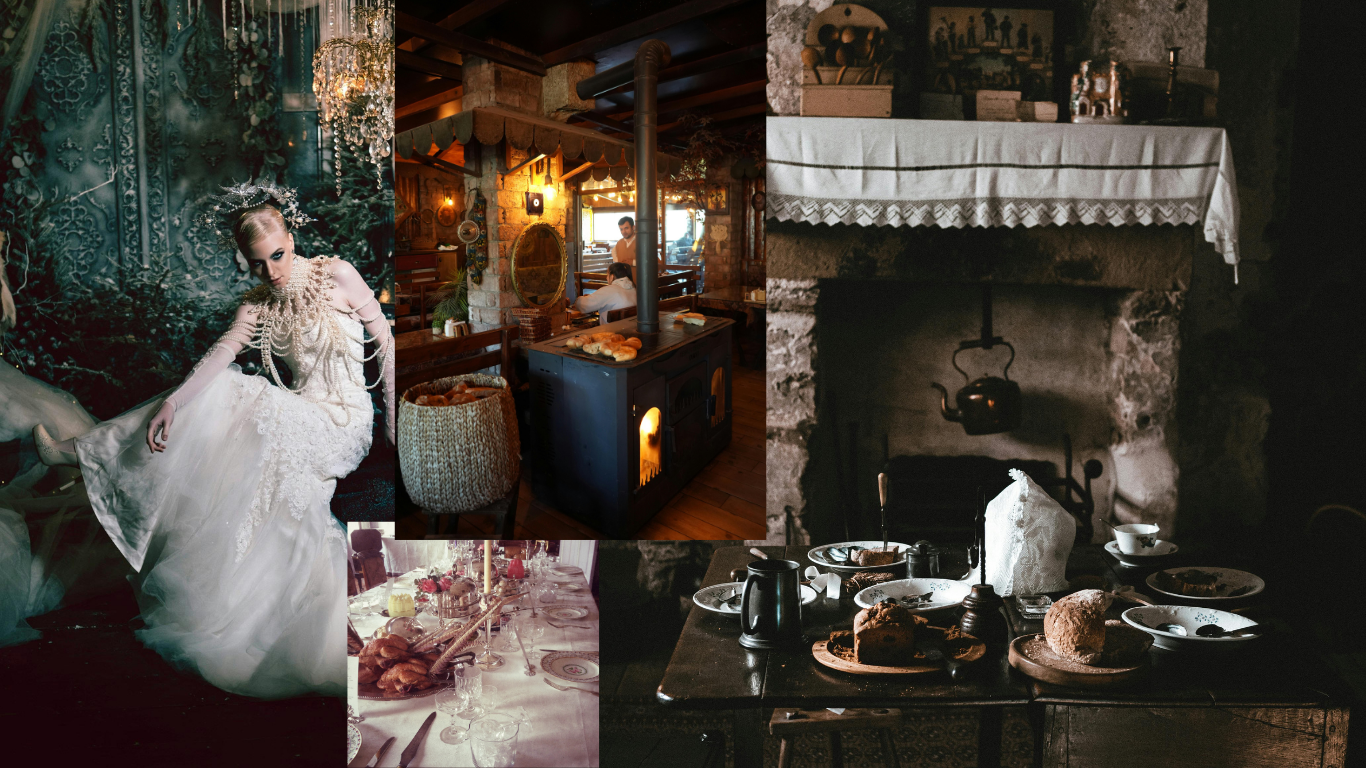
Gothic culinary archeology shatters this routine by turning the kitchen into a time machine and an alchemist's lab. This hobby involves tracking down, deciphering, and physically recreating forgotten, deeply aesthetic recipes from historical manuscripts, old community cookbooks, regional folklore, and ancient texts. You are no longer just making food; you are brewing an edible piece of history.
The Appeal of the Culinary Artifact
Historical recipes—particularly those from the medieval, Elizabethan, and Victorian eras—possess an entirely different vocabulary than modern recipes. They don't rely on precise digital scale measurements or chemical additives. Instead, they speak of "a handful of sweet herbs," "the weight of three eggs in sugar," or "simmering until the mixture is the thickness of heavy cream by the light of a fading fire."
The ingredients themselves feel magical. You find yourself working with components that have largely vanished from the modern supermarket shelf: rosewater, orange blossom honey, lavender buds, cardamom pods, elderberries, whole nutmeg fruits, and dark, unrefined molasses that smells of smoke and earth.
When you recreate these dishes, your kitchen fills with scents that are completely foreign to modern life—complex, floral, spicy aromas that instantly transport you to a different century.
Three Historic Culinary Sub-Genres to Explore
1. Medieval Floral Confections
In the Middle Ages, flowers were not merely decorations; they were vital culinary ingredients. You might track down a 14th-century recipe for "Pottage of White Roses" or a sweet, crisp lavender tart. The process involves grinding dried petals in a heavy stone mortar and pestle, infusing them into warm almond milk, and sweetening the mixture with thick, unrefined honey. The result is a delicate, pale dessert that looks and tastes like something served at a fae court.
2. The Victorian Midnight Parlor
The Victorian era was deeply obsessed with the romantic, the macabre, and the elaborate. A wonderful weekend project is recreating the complex elixirs, dark fruit cakes, and molded jellies that would have graced a midnight parlor gathering. Think of brewing a "Chilled Spiced Elderberry Elixir" infused with cinnamon, cloves, and a splash of lemon, served in a vintage crystal goblet by the light of a single beeswax candle.
3. Deep-Sea Siren Lore (The Coastal Tavern)
Drawing inspiration from coastal folklore and maritime history, this branch focuses on recipes that evoke the raw, beautiful mystery of the ocean. You might bake heavy, dark rye breads glazed with molasses and sea salt, construct savory tarts packed with wild mushrooms and herbs meant to mimic the forest floor meeting the sea, or brew a rich, spiced cider designed to warm the bones of a sailor returning from a storm. It is a culinary style that embraces deep shadows, rich textures, and bold, elemental flavors.
The Path Forward: Choosing Your Whimsy Aesthetic
The modern world will continue to demand your attention. The algorithms will become more sophisticated, the notifications louder, and the digital stream faster. The pressure to spend your quiet hours consuming content will always be present.
But you have the power to draw a line around your free time and declare it sacred.
You do not need to master all of these hobbies, nor do you need to partake in all the activities. You do not need to turn them into a lifestyle brand or share them with the world. You simply need to choose one path that resonates with your imagination and take the first step.
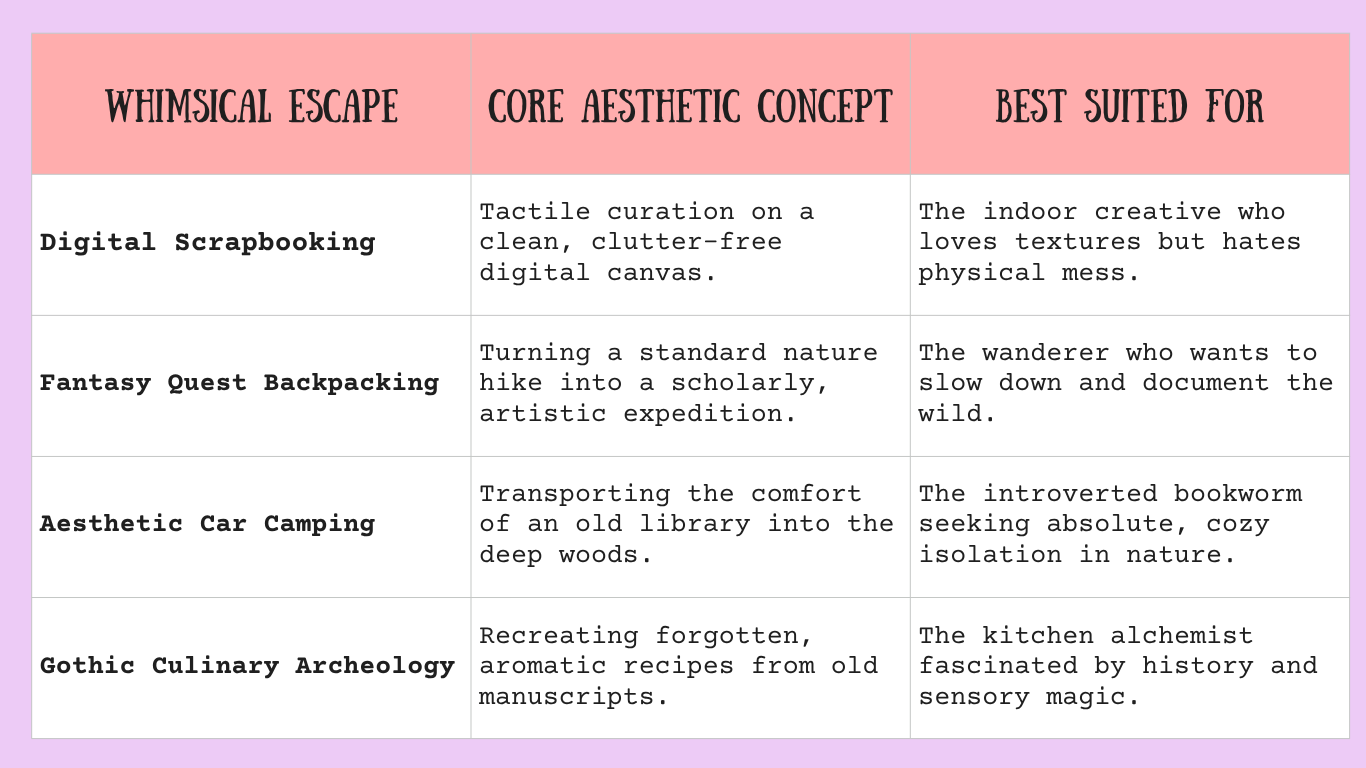
Your imagination is a landscape that requires cultivation. Whether you choose to spend your next free evening layering pink gingham bows onto a digital canvas, sketching a mossy stone by a mountain creek, reading beneath fairy lights in the back of your car, or grinding lavender buds in a mortar, you are doing something revolutionary: you are choosing to live slowly, deeply, and beautifully.
If you’re eager to begin your journaling journey tonight, make sure to claim your free copy of our Mermaid Stationery Set, currently unlocked and waiting for you in our blog archives!